

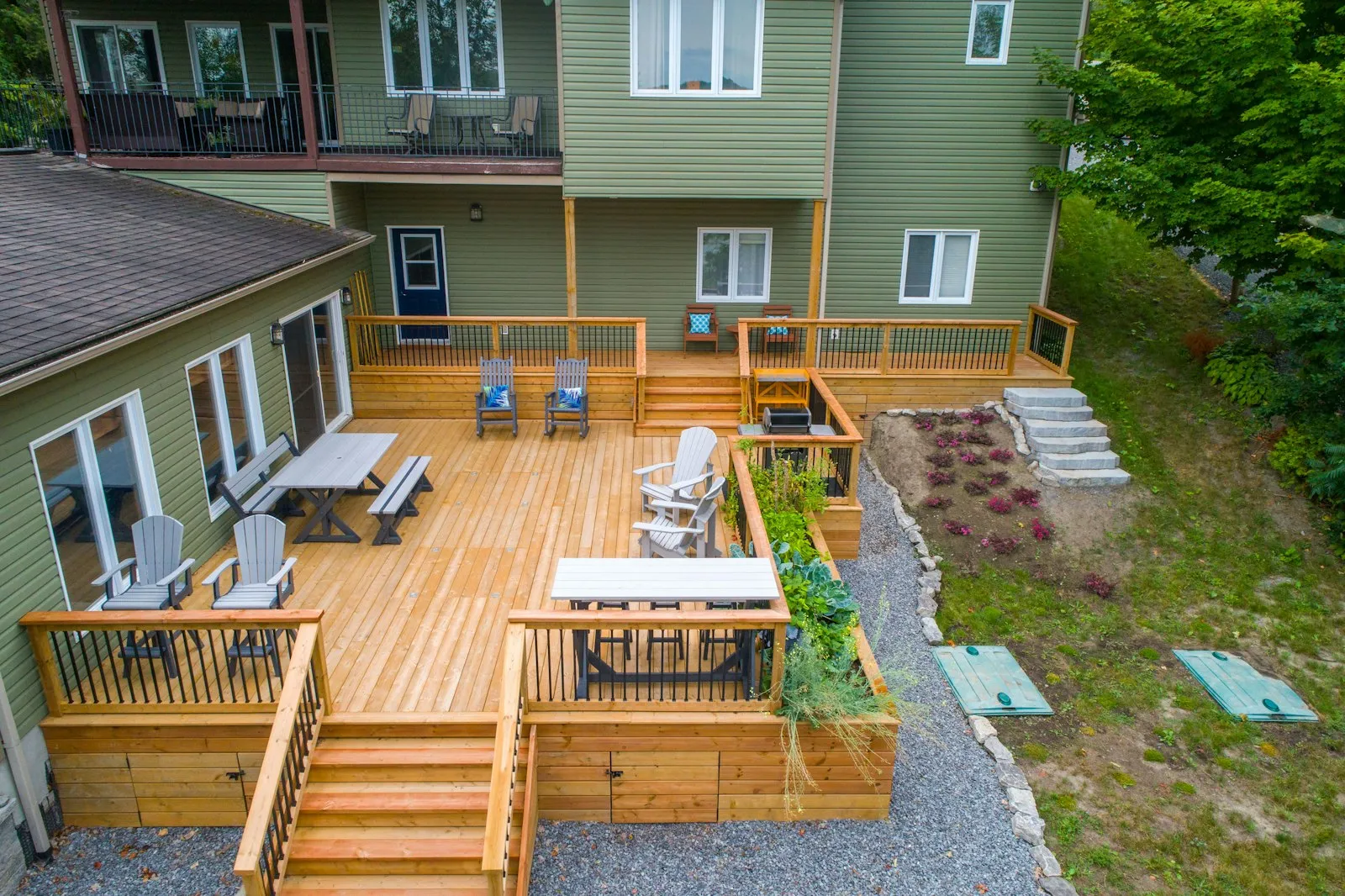
Decks get a lot of use and a lot of weather. In the Charlotte area, they bake in summer sun and sit through humid weeks and heavy rain. Most deck problems start small. A few, left alone, become safety problems.
Here’s what I check at least once a year, usually in spring.
Safety first: if boards feel spongy, connections look loose or rusted through, or a railing or stair moves, stop using that area and have a contractor evaluate it. Don’t test a deck that looks unsafe by putting weight on it.
1. Where the deck meets the house
This is the most important connection on most attached decks. The ledger board is the board bolted to the house that the deck hangs from.
Look for:
- Proper fasteners: bolts or structural screws, not just nails
- Flashing above the ledger that keeps water from getting behind it
- Rot or dark staining on the ledger or the house framing behind it
- Gaps between the ledger and the house
Problems here are a reason to call a professional promptly.
2. Posts and footings
- Posts should be solid and plumb, not leaning.
- The base of each post is where rot often starts. Look for dark, soft-looking, cracked or crumbling wood, and gaps where the post meets its footing. If you see any, have a contractor evaluate it rather than probing it yourself.
- Footings should be solid and not heaving or sinking.
3. Joists, beams and hangers
Look underneath from a safe spot, without climbing on anything:
- Joist hangers (the metal brackets holding joists) should be fully nailed and not rusted through.
- Joists and beams shouldn’t sag, crack or show soft spots.
- Rust streaks on wood can signal corroding fasteners.
4. Decking boards
- Soft or spongy boards, especially in shady areas
- Cracked or split boards
- Popped nails or screws that can catch feet
- Gaps filled with debris that keep wood wet
5. Railings
Railings fail more often than people expect.
- Watch for movement in normal use. A railing that wobbles when someone lightly rests on it, or posts that lean, are warning signs. Don’t lean your weight on a railing to test it. If one seems loose, stop using that area and have it evaluated.
- Check balusters (the vertical pieces) for looseness and spacing. Small children shouldn’t be able to slip through.
- Look at how posts are attached. A few screws into the rim board often isn’t enough.
6. Stairs
- Stringers (the side boards) should be solid where they rest on the ground and attach at the top.
- Treads shouldn’t flex, crack or be loose.
- Handrails should be graspable and firmly attached.
- Lighting for nighttime use.
Simple maintenance
- Keep the deck clean and gaps clear of debris.
- Reseal or stain as the product recommends, usually every couple of years.
- Replace individual damaged boards before the damage spreads.
- Keep plants and soil away from posts and the ledger.
When to call a professional
- Any problem at the ledger connection
- Rotted posts, beams or joists
- Loose or wobbly railings you can’t secure properly
- Stairs that move or feel unsafe
- Older decks you aren’t sure were built to current standards
Repairs to structural parts of a deck often need a permit. A qualified contractor can tell you whether a repair or a rebuild makes more sense.
Questions about a deck on a Charlotte-area home? Get in touch.