

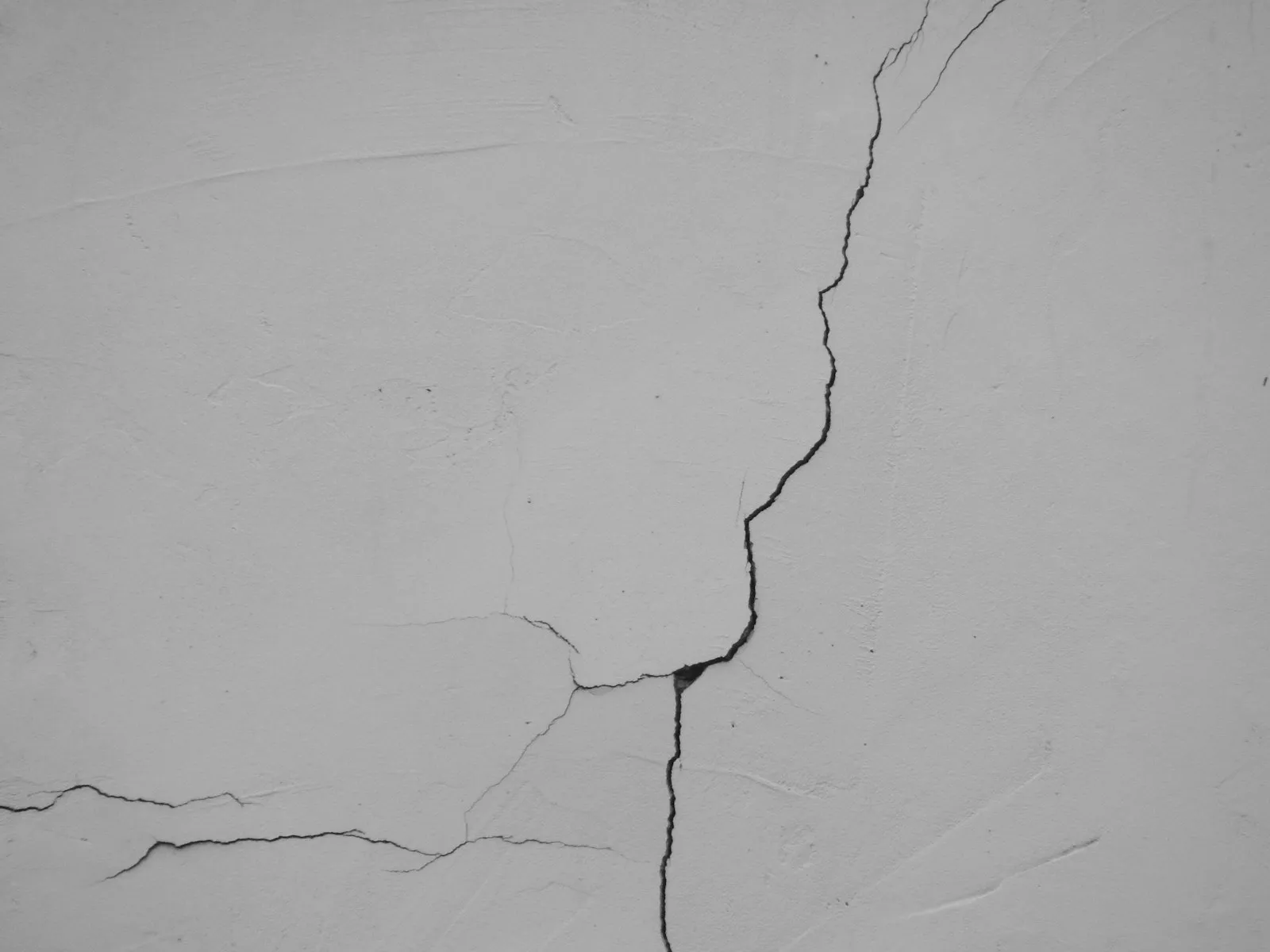
Every house moves a little. Wood shrinks and swells with the seasons, soil gets wet and dries out, and over the years small cracks appear. Many are cosmetic. Some point to movement worth having a professional look at. Appearance and crack size alone can’t rule movement in or out, which is why the follow-up questions matter.
On a showing, I’m not trying to diagnose the foundation. That’s a structural engineer’s job. I’m trying to decide whether a house needs that kind of look before you commit.
What I usually see as normal
- Hairline cracks in drywall, often running from the corners of windows and doors
- Small, straight cracks in a poured concrete foundation or garage slab
- Nail pops in drywall ceilings
- A slightly uneven floor in an older home
These are common. I note them, and if there are a lot of them in one area, I look a little closer.
What makes me ask more questions
Cracks with a pattern
- Stair-step cracks in brick or block, following the mortar joints
- Cracks that are wider at one end than the other
- Cracks that look noticeably open, or where one side sticks out past the other
- Fresh cracks through fresh paint or patching. That suggests movement after the repair.
Floors
- A noticeable slope you can feel when you walk, or see when a marble would roll
- A dip or hump in the middle of a room
- Bounce in a floor that should feel solid
Doors and windows
- Several doors that stick, swing open or closed on their own, or won’t latch, especially in the same part of the house
- Gaps above doors that are wider on one side
- Windows that are hard to open along with cracks nearby
A single sticky door can have many causes, from humidity to hardware. A pattern of them in one area is worth a question.
Outside clues
- Gaps between the brick and window frames
- Leaning chimneys or porches pulling away from the house
- Soil washing away from the foundation, or water pooling against it
What I ask next
- “Has the foundation ever been evaluated or repaired? Is there an engineer’s report or a warranty?”
- “Have any cracks been patched? When?”
- “Has there been water in the crawl space or basement?”
A past foundation repair with a dated engineer’s report and a transferable warranty is useful evidence to review. It tells you what was found and done then, not how the house is performing today, so it’s still worth asking your own engineer: “Does the current condition match what the repair was meant to fix?”
When to call a structural engineer
If you see the patterns above, ask your home inspector to look closely, and strongly consider a structural engineer during your due diligence period. An engineer can tell you whether you’re looking at normal settling, an old issue that has stopped, or ongoing movement, and what a fix would involve.
What it changes
Most houses with cracks are fine. The point of looking is to separate the ordinary from the expensive, before you sign. If an engineer finds a real problem, you can negotiate the repair, ask for a credit, or walk away while it’s still your choice.
Not sure about a crack you saw on a showing? Book a free call.